


Rising Research
Contact
1025 Walnut Street
Suite 300
Philadelphia, PA 19107
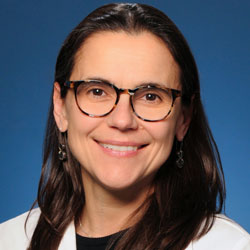
Dr. Rising is a clinician investigator with a primary research interest in improving health, elevating care quality, and strengthening patient safety—ultimately driving better outcomes for patients and communities across populations. She completed medical school at the University of California San Francisco (2008), emergency medicine residency training at Boston Medical Center (2012), and completed an NIH T32 fellowship during which she received a Masters of Science in Health Policy Research at the University of Pennsylvania (2014).
Dr. Rising is the Chief Medical Officer of the Jefferson IMPACT Institute and Professor of Emergency Medicine and Population Health at Thomas Jefferson University. The IMproving Patient And Community ouTcomes (IMPACT) Institute is a health system-based, cross-pillar collaboration designed to catalyze efforts that advance care excellence. Her work over the past few years has focused on improving screening and closed loop referral processes to address health related social needs, creating pathways to address population health needs with the emergency department setting (e.g., cancer screenings, HIV/hepatitis screening), addressing patient uncertainty during acute care visits, and developing more patient-centered outcome measures. She has served as PI for multiple grants from foundations, the Patient Centered Outcomes Research Institute (PCORI), the Agency for Healthcare Research and Quality (AHRQ), and the National Institutes of Health (NIH). She is also a core faculty member for a HRSA-funded T32 program focused on developing researchers focused on primary care, telehealth, mental health, and addiction medicine.
Research Projects
Nutrition Health Related Social Need Assessment and Referral Tool (N-HART)
This study was conducted to develop a novel measurement instrument designed to move beyond simple yes/no screening toward a more nuanced assessment of food-related needs that incorporates life circumstances such as access to working equipment to store/prepare food, ability to cook, and ability to physically get groceries from store to home. The N-HART tool enables individualized referrals to “best fit” food and nutrition resources, aligning clinical recommendations with patients’ reported capacities. With this research, we have implemented an innovative support model that systematically connects patients who both identify a social need and express readiness for assistance to tailored resources and follow-up support. This work was funded by The MANNA Institute.
Targeted EHR-based Communication of Diagnostic Uncertainty (TECU)
The goal of this project is to test the impact of an electronic health record-delivered intervention to improve outcomes for patients discharged from the emergency department with diagnostic uncertainty. Approximately one-third of ED visits end with an uncertain diagnosis. Patients lack an understanding of this uncertainty which contributes to ED recidivism and is a patient safety risk. TECU aims to improve the quality and safety of the care transition home for patients with diagnostic uncertainty at the conclusion of their ED visit. This work is being funded Agency for Healthcare Research and Quality.
Digital Health Readiness Screener (DHRS)
In this study, we comprehensively assessed digital health readiness among a diverse group of patients and created a 24-item Digital Health Readiness Screener (DHRS) to identify and quantify barriers to digital readiness. The items in the DHRS exemplify the complexity of factors influencing digital health uptake and highlight several areas for potential intervention. Identifying and understanding individuals’ barriers to digital health readiness can help health systems efficiently deploy resources to provide personalized patient-centered support. This work was funded by American Health Information Management Association.